Skip to the main content.
Get Started

Stay Connected

Sign up to hear about Snapshot's latest news and projects!

NetSuite Ecommerce Integration

Connect your ecommerce platform to NetSuite and reduce the manual work between your storefront and your back office.

Storefront NetSuite Orders Inventory Pricing Fulfillment Customers Last sync 10:42 AM
Storefront and back office

Why Ecommerce and NetSuite Need to Work as One System

Snapshot integrates BigCommerce, Shopify, and Shopware with NetSuite for B2B distributors, manufacturers, and wholesalers.

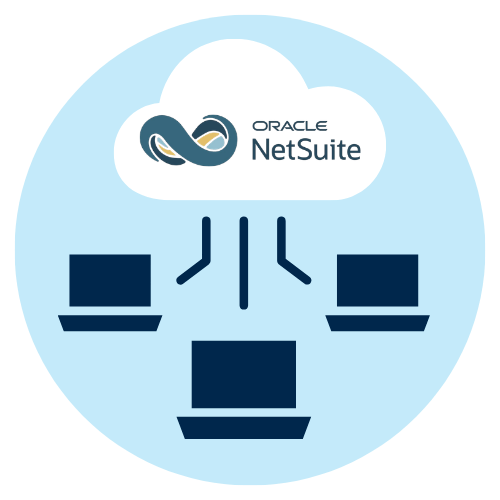
NetSuite ecommerce integration is the process of connecting your ecommerce storefront to your NetSuite ERP so that orders, inventory, pricing, customer records, and fulfillment data move between the two systems automatically, on a defined schedule or trigger, with exceptions flagged for review.

When your ecommerce system and NetSuite work separately, the gap between them becomes a daily operational problem. For B2B distributors, manufacturers, and wholesalers, those gaps can create margin risk on transactions, slow down the order-to-cash cycle, and make it harder to give customers accurate information.

A well-configured NetSuite ecommerce integration reduces those friction points by keeping the two systems in sync. Your team can spend less time reconciling data and more time serving customers and running the operation.

What it covers

What Does a NetSuite Ecommerce Integration Do for Your Business?

An integration between your ecommerce platform and NetSuite connects the data and workflows that both systems need to share to function accurately. The specific scope depends on your business, but a well-configured integration typically covers the following.

Order Synchronization

Orders placed on your ecommerce storefront are imported into NetSuite automatically for fulfillment, invoicing, and reporting, on a schedule or as they are placed, depending on the platform and integration. Fulfillment, cancellation, and billing updates from NetSuite are sent back to the storefront, so customers can see the status of their order.

Inventory Sync

Available inventory in NetSuite is sent to your storefront on a defined sync schedule, which reduces the risk of overselling and stockouts. The storefront shows quantities from the most recent sync, so Snapshot sets the schedule during discovery to match your order volume.

Pricing and Contract Rules

Customer-specific pricing maintained in NetSuite, such as price levels and promotions, can be synchronized to the storefront, depending on the platform, plan, and integration. Contract pricing and other custom pricing logic are scoped during discovery and may require custom development.

Customer Record Management

Customer accounts can be synchronized between the two systems in the directions your scope defines, and customer matching rules help reduce duplicate records and data conflicts that slow down accounts receivable and customer service.

Fulfillment and Shipping Updates

Fulfillment status and shipping details from NetSuite are sent back to the ecommerce platform, so customers receive shipping updates from the storefront without your team sending each one by hand.

Refunds and Cancellations

Refunds and order cancellations sync between the storefront and NetSuite, depending on the platform and integration, so credits and refunds are recorded in your existing financial processes. Return workflows beyond refunds are scoped during discovery.

Platforms

Which Platforms Does Snapshot Integrate with NetSuite?

BigCommerce

Integrating BigCommerce with NetSuite sends products, pricing, and inventory from NetSuite to BigCommerce and brings orders and customer records from BigCommerce into NetSuite, so your back-office team can work from ecommerce orders directly in NetSuite.

Snapshot builds and supports BigCommerce integrations on integration platforms such as Celigo and Patchworks, configured around your specific workflows and data model.

Plan notes

For B2B distributors and wholesalers, BigCommerce offers:

  • Customer groups on its Growth plan and above
  • Price Lists on its Performance plan
  • B2B Edition, which adds company accounts, sales staff quoting, a buyer portal, and an invoice portal
  • B2B Edition is BigCommerce’s enterprise B2B offering and is added by request through BigCommerce.

Shopify

Integrating Shopify with NetSuite imports orders and customers into NetSuite and sends inventory, products, fulfillments, and refunds back to Shopify.

Snapshot builds Shopify integrations, including Shopify Plus B2B stores, on integration platforms such as Celigo, configured around your order volume and workflows.

Plan notes
  • Shopify B2B is available on the Basic, Grow, Advanced, and Plus plans and includes companies, catalogs, net payment terms, and quantity rules.
  • Plus adds unlimited catalogs, direct catalog assignment to companies and locations, deposits, and partial payments.

Shopware

Integrating Shopware with NetSuite synchronizes customer, order, pricing, and inventory data between the storefront and your ERP, so the B2B experience on the storefront draws on current NetSuite data.

Snapshot builds Shopware integrations that reflect the complexity of B2B operations and avoid a one-size-fits-all approach.

Plan notes
  • Shopware offers B2B Components for manufacturers and distributors that need company accounts, quoting, and order approval workflows.
  • B2B Components are available from the Shopware Evolve plan through the Shopware Commercial extension.
How a project runs

What to Expect from a NetSuite Ecommerce Integration Project

Snapshot’s integration projects typically involve:

Discovery and Scoping

Before any configuration begins, Snapshot maps the data flows your business requires, including which objects need to sync in each direction, how often, and what business rules need to apply during the sync. The output is a defined integration scope that sets clear expectations for what the integration will and will not handle.

Integration Platform Configuration

Snapshot evaluates the integration approach during discovery, including integration platforms such as Celigo and Patchworks, depending on your ecommerce platform; NetSuite Connector where it supports your platform; and custom integrations built on NetSuite’s REST web services. Snapshot configures the selected integration approach to match your specific field mappings, sync logic, and error handling requirements. For businesses with complex pricing, multi-location inventory, or B2B ordering workflows, the configuration goes beyond a plug-and-play setup. Learn more about Snapshot’s NetSuite data integration services.

Data Mapping and Review

The quality of your integration depends on the quality of your data. Before go-live, Snapshot reviews the data structures in both systems to identify gaps, duplicates, or inconsistencies that would cause errors in the integrated environment.

Testing

Integration testing covers the full range of transaction scenarios your business runs: standard orders, partial fulfillments, returns, credit orders, and edge cases specific to your operation. Testing before go-live lets your team correct issues before they affect live orders.

Go-Live

Snapshot manages the transition to live integration and provides close support in the period immediately after go-live.

Ongoing Support

As your business changes, your integration requirements change with it. Snapshot supports clients beyond the initial go-live, including adjustments for new product lines, additional sales channels, and platform updates.

Industries

Built for B2B Distributors, Manufacturers, and Wholesalers

NetSuite ecommerce integration fits businesses where gaps between the storefront and the back office create operational cost.

With over 25 years of ecommerce experience and 12-plus years as a NetSuite Alliance Partner, Snapshot works with businesses in industries including:

Companies we’ve worked with on integrations between commerce platforms and NetSuite include Lindemann Chimney Supply, Beno J. Gundlach, Co., and Kurtz Bros.

Work with Snapshot

Why Businesses Choose Snapshot for NetSuite Ecommerce Integration

NetSuite Alliance Partner with over a decade of experience

Snapshot has been a NetSuite Alliance Partner for more than 12 years. Our platform depth covers both the technical mechanics of integration and how to configure the underlying NetSuite environment to support the integration as your business changes.

Ecosystem expertise

We understand how ERP, ecommerce, and integration middleware must work together to deliver accurate data across the business. Snapshot works across the NetSuite ecosystem including integrations with Celigo and Patchworks, and holds partnerships with BigCommerce, Shopify, and Shopware.

Implementation experience across complex B2B operations

B2B environments with complex pricing, multi-location inventory, and high order volume often need configuration beyond a standard template. Snapshot scopes integrations around the operational requirements of your business.

Long-term partnership mindset

Your ecommerce integration is an ongoing project. As your platforms update, your product catalog grows, and your business adds channels, your integration needs to evolve with it. Snapshot supports clients beyond the initial go-live, so the integration can keep supporting your business as it changes.

The Snapshot team

25years in business

12+years as a NetSuite Alliance Partner

FAQ

Frequently Asked Questions: NetSuite Ecommerce Integration

Don’t see yours? Ask our team.

What does a NetSuite ecommerce integration do?

A NetSuite ecommerce integration connects your ecommerce storefront to your NetSuite ERP so that orders, inventory, pricing, customer records, and fulfillment data move automatically between the two systems on a defined schedule or trigger. The goal is to reduce the manual data entry, reconciliation, and error correction that occur when the two systems operate independently. A properly configured integration means orders placed on your storefront flow into NetSuite for processing, inventory levels on your storefront reflect NetSuite availability as of the latest sync, and customer-specific pricing maintained in NetSuite, such as price levels and promotions, can be synchronized to the storefront, depending on the platform, plan, and integration.

How do you integrate ecommerce with NetSuite?

Integrating ecommerce with NetSuite typically involves three components: an integration approach, such as an integration platform like Celigo or Patchworks, NetSuite Connector for supported platforms, or a custom build; configuration work that maps your specific fields, business rules, and sync logic; and testing against the transaction scenarios your business actually runs. The complexity of the project depends on your ecommerce platform, the sophistication of your pricing and ordering workflows, and the state of your data in both systems. Snapshot manages the full integration process from scoping through go-live and ongoing support.

Which ecommerce platforms does Snapshot integrate with NetSuite?

Snapshot integrates NetSuite with BigCommerce, Shopify, and Shopware. Each platform handles B2B commerce differently, and each integration is configured around the specific data flows and business rules your operation requires, without starting from a standard template. Snapshot is a partner of all three platforms in addition to its NetSuite Alliance Partner status.

Do you need an integration platform or connector to integrate ecommerce with NetSuite?

Direct API integrations between an ecommerce platform and NetSuite are possible, using NetSuite’s REST web services and the platform’s APIs. They require custom development and ongoing maintenance as either system changes. Integration platforms such as Celigo and Patchworks provide prebuilt integrations and connectors, which reduce the custom development a project needs, and NetSuite Connector is also an option for supported platforms. Integration platforms and NetSuite Connector are licensed separately from NetSuite and your ecommerce platform. Snapshot evaluates these options during discovery and configures the selected approach to match your specific requirements rather than relying on default settings.

How long does a NetSuite ecommerce integration take?

The timeline depends on the complexity of your business, the ecommerce platform involved, and the state of your data in both systems. A straightforward integration for a single storefront with standard pricing and order workflows is typically the fastest type of project to complete. More complex integrations involving multi-location inventory, B2B contract pricing, and custom fulfillment workflows take longer to scope, configure, and test. Snapshot provides a project timeline based on a discovery review of your specific environment before any configuration work begins.

What data syncs between NetSuite and an ecommerce platform?

The specific data sync depends on your integration scope, but a NetSuite ecommerce integration typically synchronizes orders, inventory levels, customer records, product and price data, fulfillment status, and refunds and cancellations. For B2B operations, the integration may also sync company accounts and contacts and, through custom flows, account-specific pricing, quotes, and invoices. Snapshot defines the full data sync scope during the discovery phase of each project.

Let’s talk

Ready to Connect Your Storefront to NetSuite?

Snapshot integrates BigCommerce, Shopify, and Shopware with NetSuite for B2B distributors, manufacturers, and wholesalers.

Each integration is scoped around your platform, your data, and your order workflows.

NetSuite ecommerce integration

Talk to an Ecommerce Expert

Tell us about your storefront and what you need to connect to NetSuite, and a Snapshot team member will reach out to schedule a call.