
Collections: Credit and Collections, Worked Inside NetSuite
A NetSuite app for the credit desk: a ranked collector queue, promises to pay checked against real payments, dunning that pauses itself, a release board for held orders, credit applications with a scorecard, and exposure across the whole customer family.
From the first reminder to the credit decision, in one place.
A queue worth working
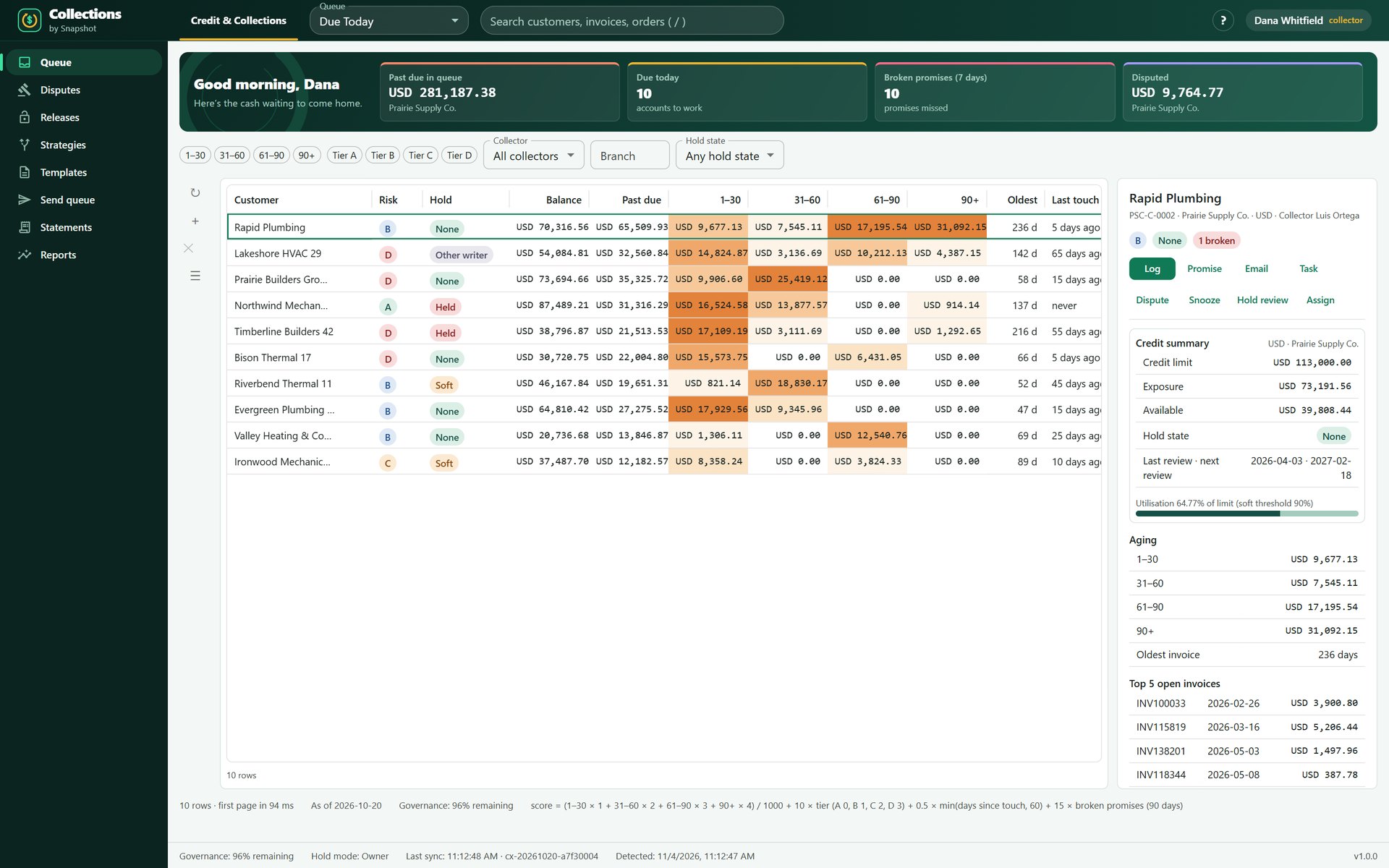
Every account with open AR, ranked by a priority score you can see, with saved queues like Due Today and Broken Promises and a preview of the account.
Promises that check themselves
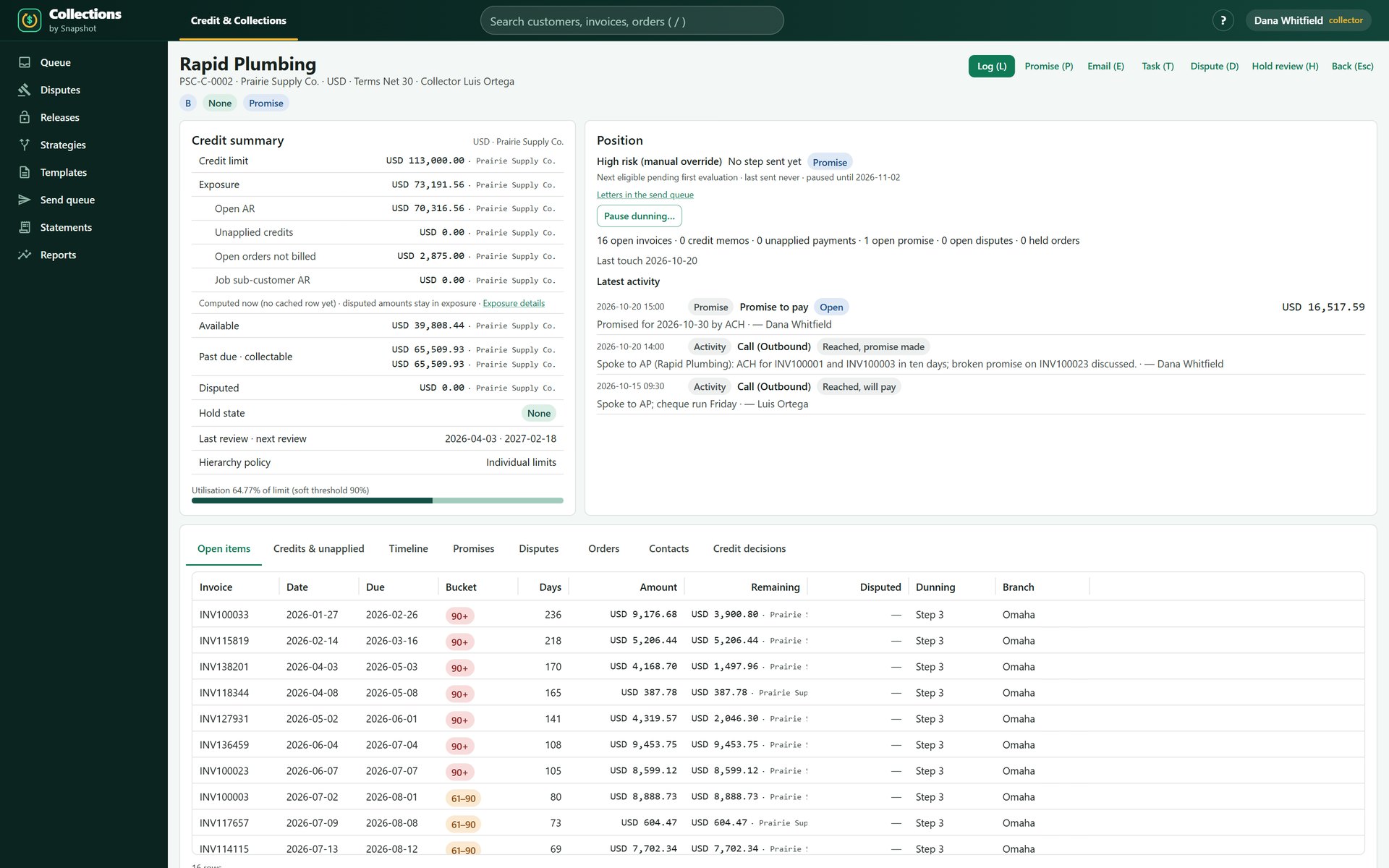
A promise to pay is marked kept, partly kept or broken by the payment actually applied in NetSuite, not by memory.
Dunning that knows when to stop
Strategies with ordered steps and versioned letters pause on their own when a customer disputes an invoice or makes a promise.
A release board for held orders
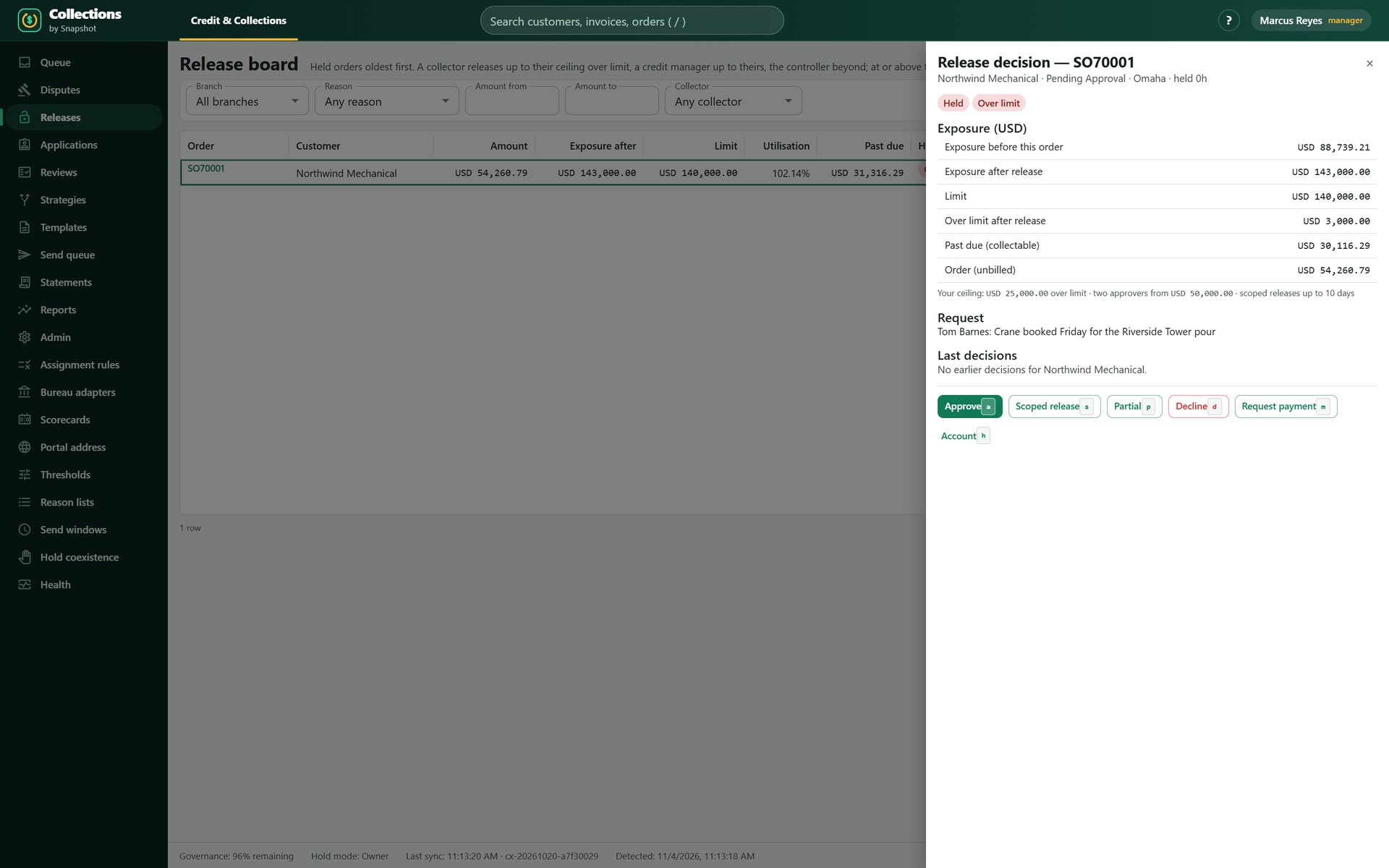
Every held order with exposure before and after release: approve it, release part of it or only until a date, or decline, within each role’s ceiling.
Credit applications with a scorecard
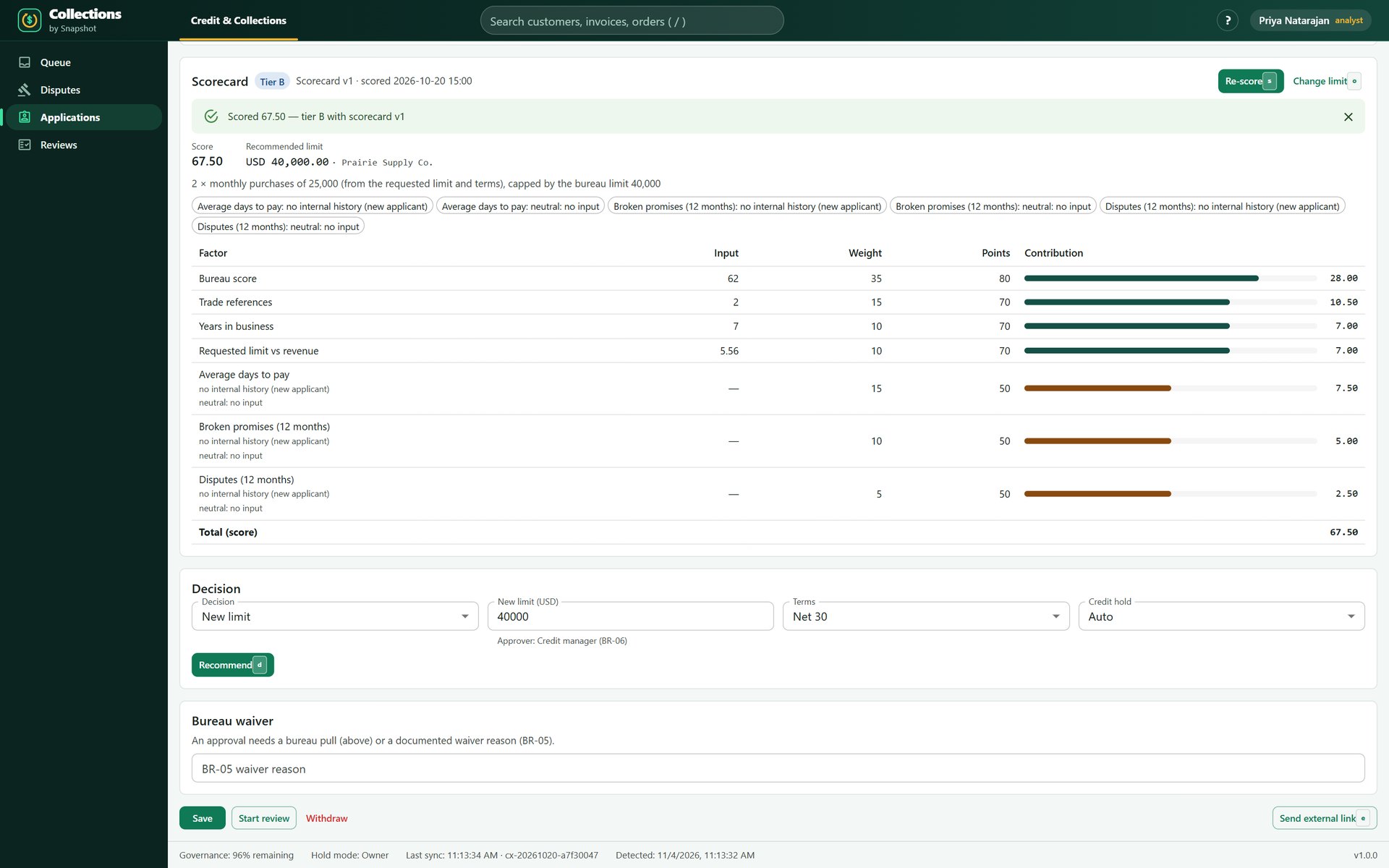
Applications run from intake through weighted factors to a recommended limit, then to the right approver, who writes the limit and terms back to NetSuite.
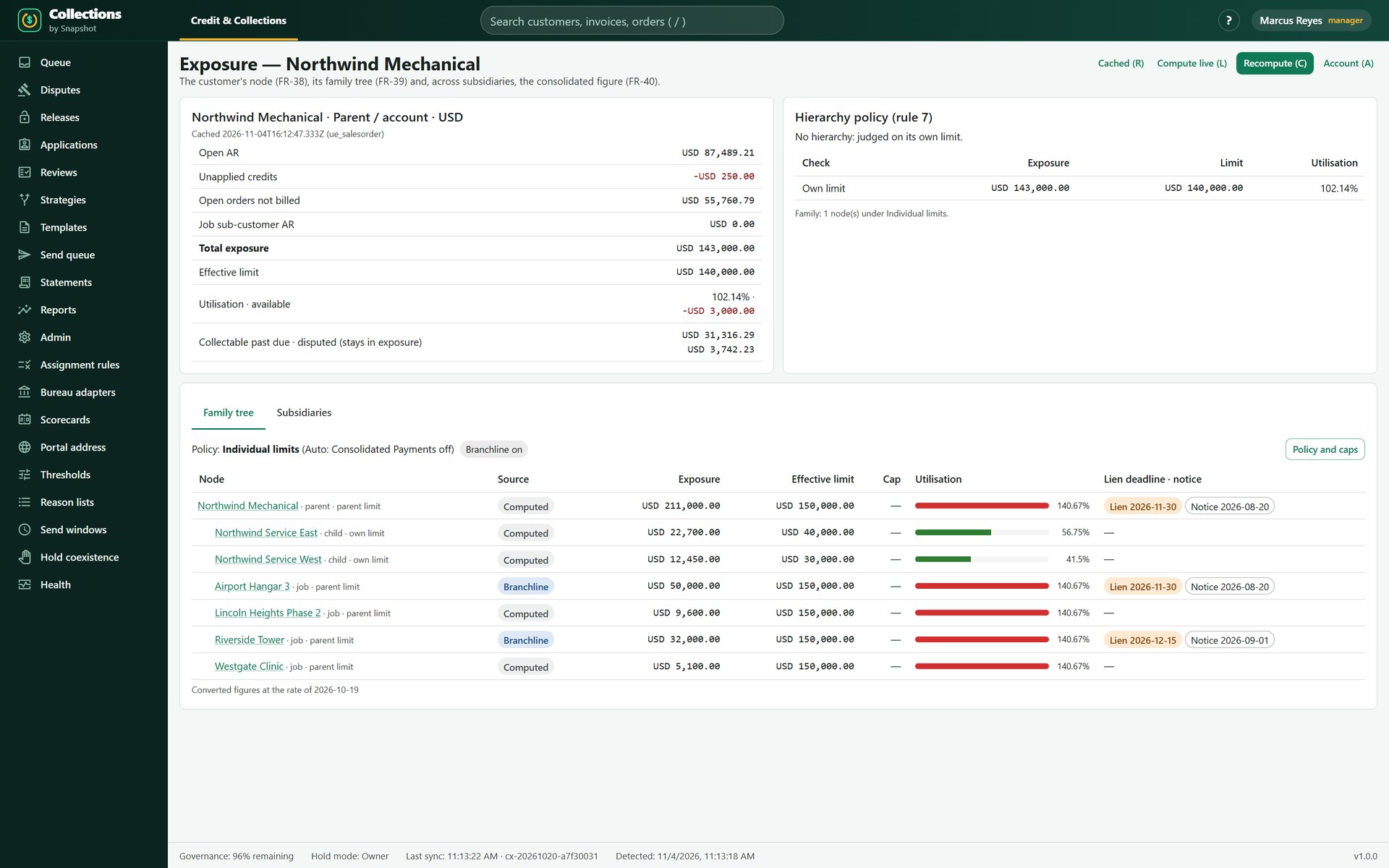
Exposure across the family
Open AR and open orders roll up across parent, branch and job accounts and subsidiaries, with utilisation and lien deadlines on each.
From the collector to the controller.
Every decision written back to NetSuite.
- Native records, not a side system.Calls, notes, credit limits, terms, holds and credit memos are written to the NetSuite customer and its transactions, so everyone else sees the same story.
- Cash stays where it is.Collections never applies payments. Finance keeps native NetSuite for cash application and the general ledger, and the queue reads what was applied.
- Guardrails on every release.Release ceilings by role, a second approver above a threshold, and a check at fulfilment that stops a shipment if the customer goes back on hold.
See your collections and credit desk in one queue
Tell us how many collectors you have and how you handle dunning, held orders and credit applications today, and a NetSuite specialist will walk you through Collections on a demo distributor.
Book a Collections demo
FAQ
Questions about Collections
Don't see yours? Ask our NetSuite team and someone will get back to you.
What is Collections?
Collections is a NetSuite app from Snapshot Design for the credit desk of a B2B distributor or manufacturer. It turns NetSuite aging into a ranked work queue, with promises to pay, dunning, disputes, a release board for held orders, credit applications with a scorecard, and exposure across a customer’s family of accounts.
Who is Collections for?
Collectors, credit managers, credit analysts and the controller at distributors and manufacturers on NetSuite, especially those with branch or job accounts and orders that go on credit hold.
How does the collector’s queue decide what comes first?
Each account gets a priority score from its past-due balance by aging bucket, its risk tier, how long since anyone touched it and its broken promises. The formula is shown on screen, and saved queues such as Due Today and Broken Promises narrow it down.
How do held orders get released?
The release board lists every held order with exposure before and after release. A credit manager can approve it, release only this order, release part of it or only until a date, or decline, within a ceiling for their role, with a second approver above a threshold.
Does Collections apply payments?
No. Cash application and the general ledger stay in native NetSuite. Collections reads the payments that were applied, for example to mark a promise to pay as kept or broken.
Does our data leave NetSuite?
No. Collections runs in your NetSuite account and writes its decisions, calls, notes, limits and holds to native NetSuite records and custom records in the same account.