
Shelfline: Retailer Deductions and Compliance, Inside NetSuite
A NetSuite app for consumer goods brands that sell into retailers: every short pay, chargeback and compliance fine becomes one deduction, coded to the retailer’s reason, scored on the evidence, put on its dispute deadline and cleared to the promotion that funded it.
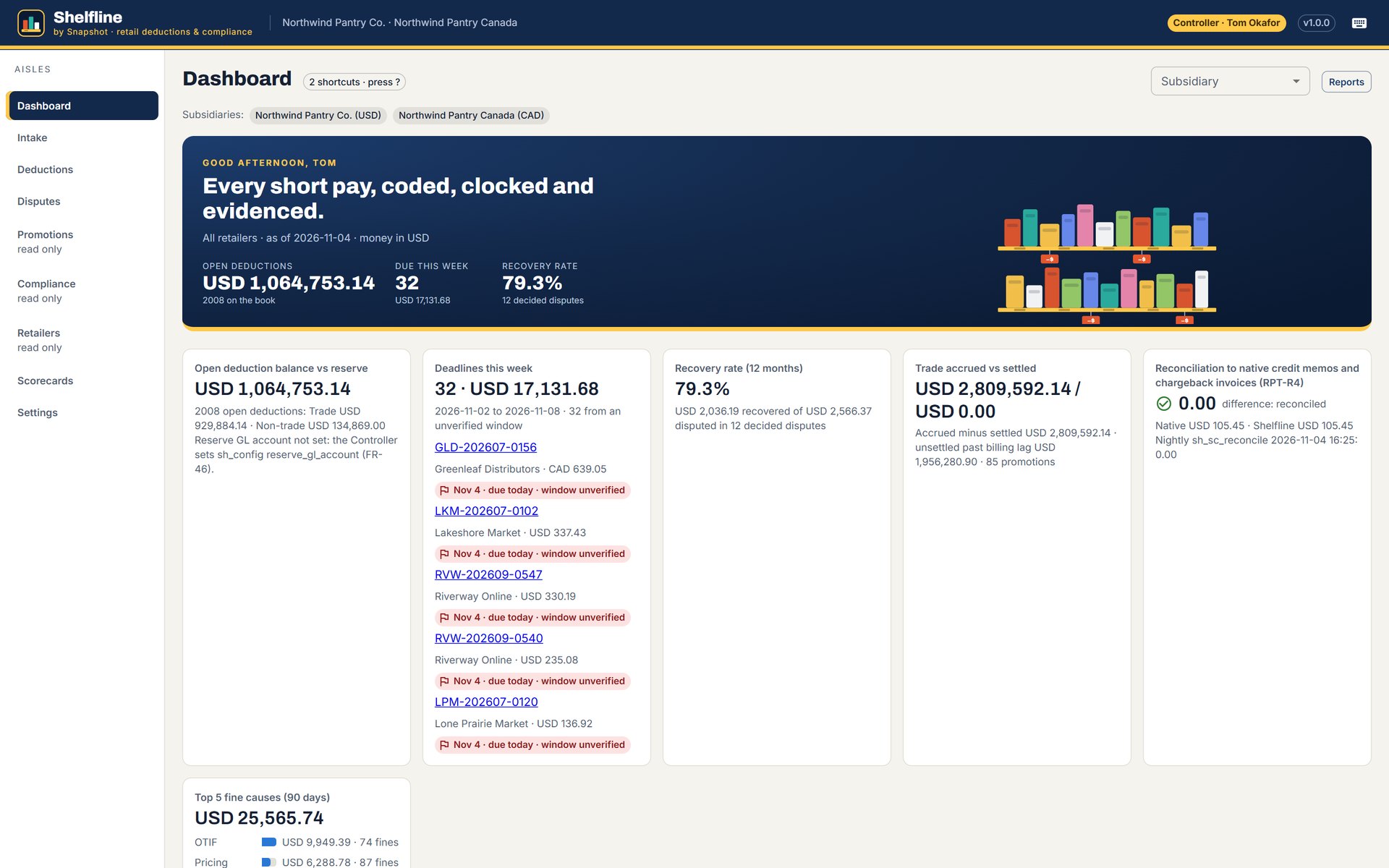
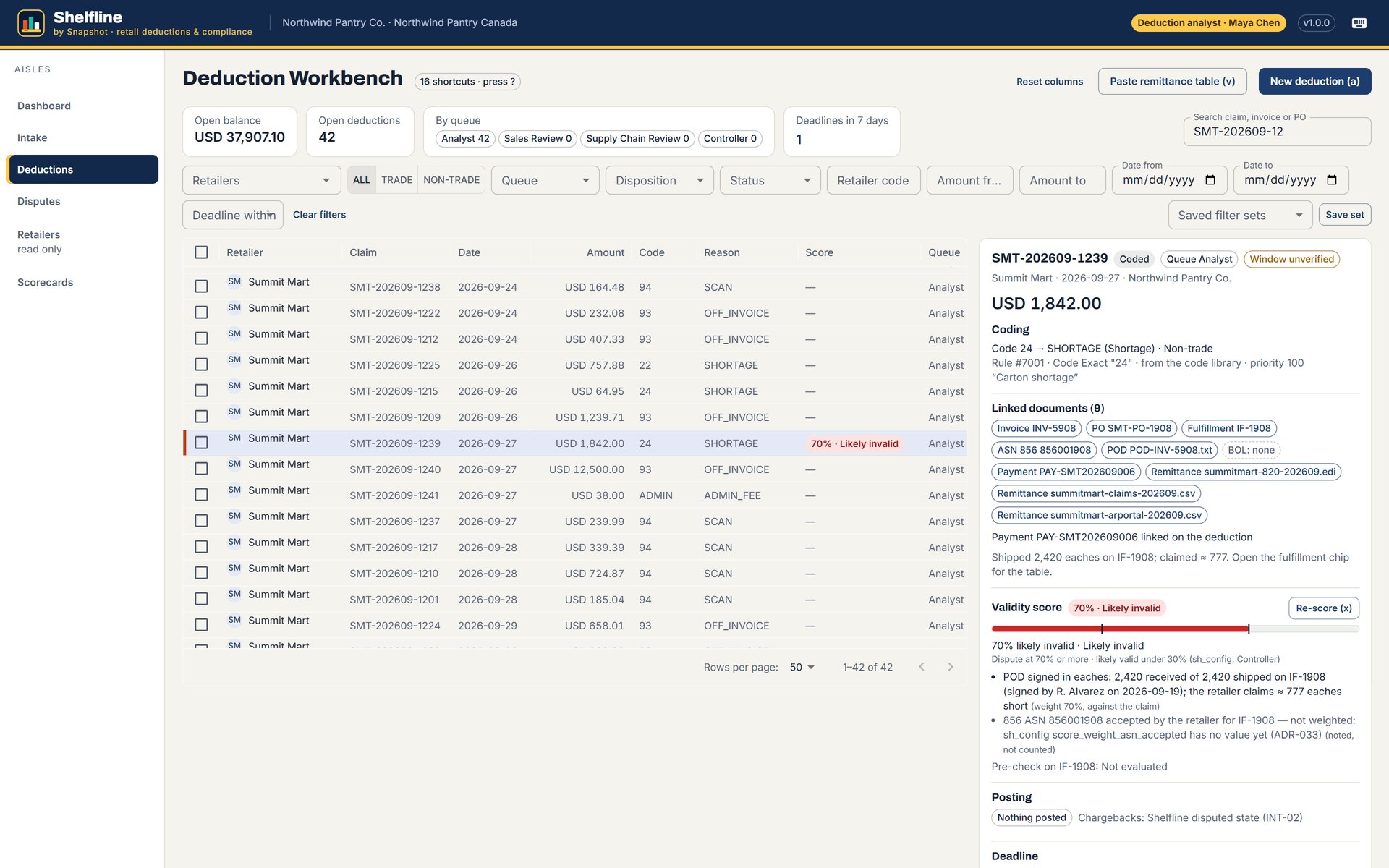
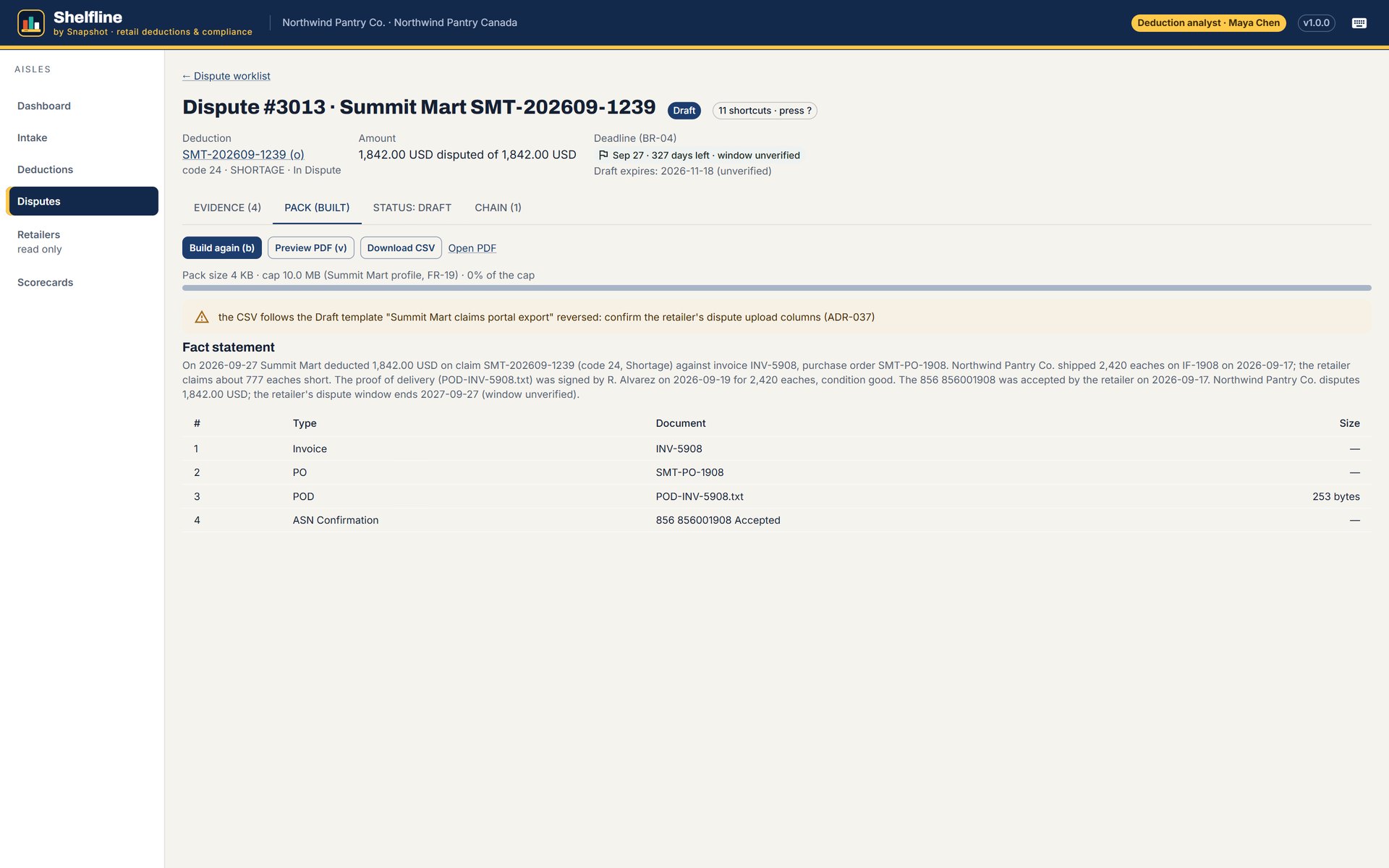
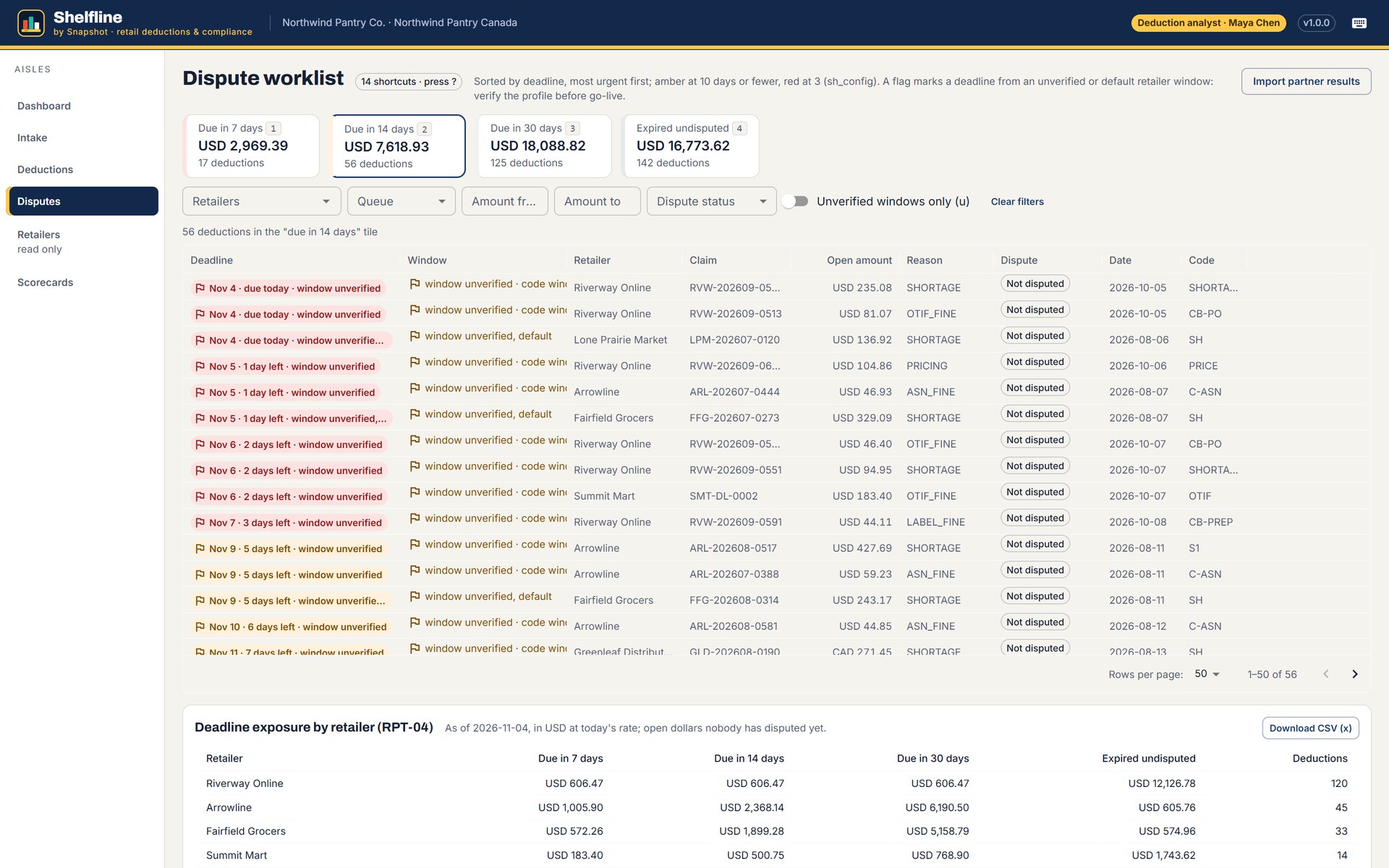
From the short pay to the recovered dollar.
Every claim in one place
EDI remittance files and retailer portal exports come in as one deduction per claim, even when the same claim arrives more than once.
Coded by your rules
Ordered coding rules map each retailer’s reason code to yours, as trade or non-trade, and record which rule fired.
Scored on the evidence
A validity score weighs the proof of delivery, the advance ship notice and price changes on file, and routes each deduction to dispute or write-off.
Deadlines you can see
Every deduction carries its dispute deadline by retailer and reason, amber at 10 days and red at 3, on one sorted worklist.
Dispute packs in one key
Invoice, PO, signed proof of delivery and ASN gathered into a PDF and CSV pack with a written fact statement, ready to file.
Trade cleared to promotions
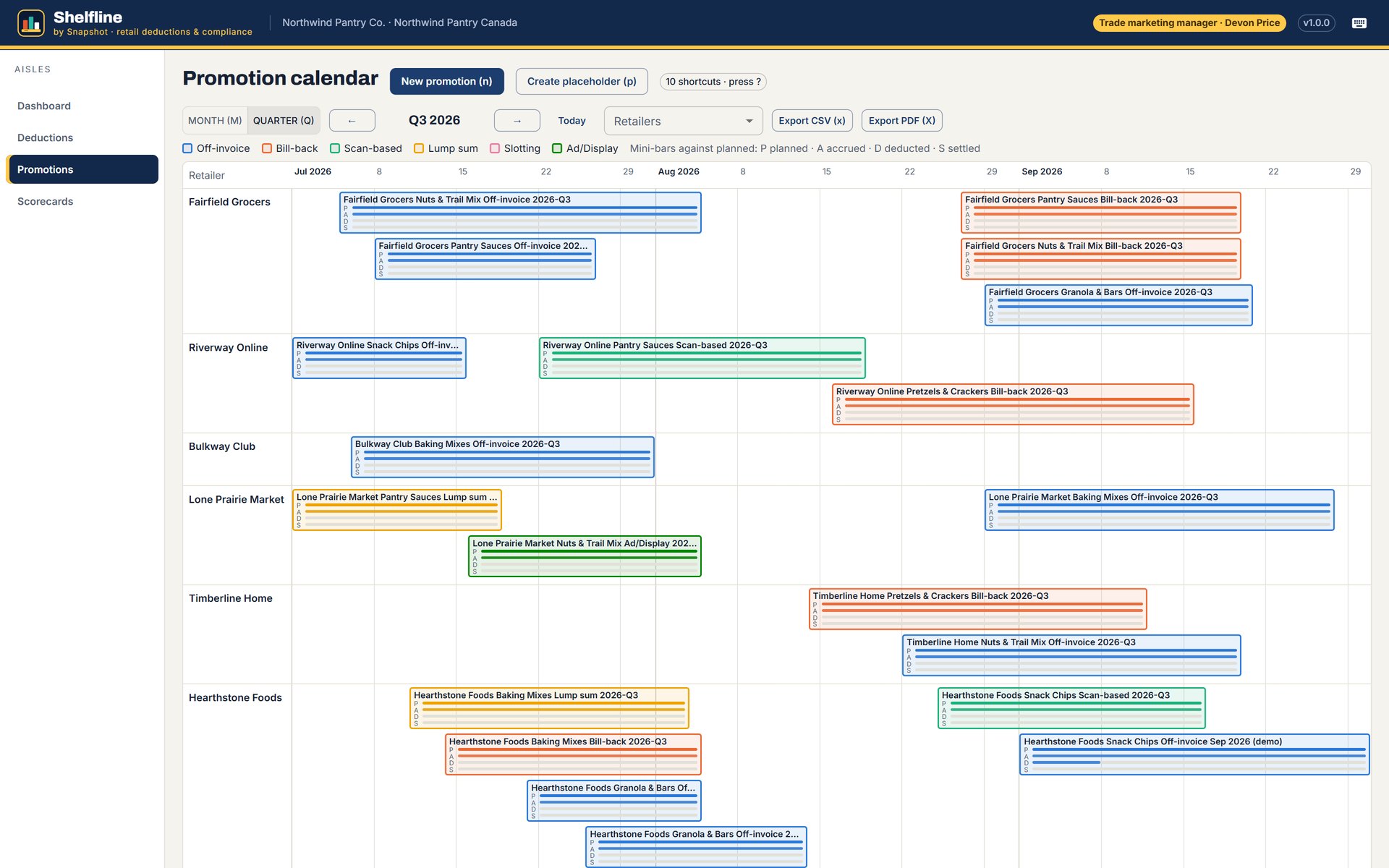
A promotion calendar by retailer shows planned, accrued, deducted and settled dollars, and trade deductions clear to the promotion that funded them.
From the deduction analyst to the controller.
Deductions on native NetSuite records, with no second ledger.
- Linked to what you shipped.Each deduction links to the NetSuite invoice, sales order, fulfillment and payment it came from, so the evidence is already there when you dispute.
- Write-offs are NetSuite credit memos.Approved write-offs post as native credit memos to the accounts your controller sets, and a nightly check reconciles them to the deduction book.
- Controls for the controller.Write-off approvals, a reserve against open deductions and a dashboard that reconciles to native credit memos keep the books honest.
See every retailer deduction on a deadline, inside NetSuite
Tell us which retailers you sell to and how you work deductions and trade claims today, and a NetSuite specialist will walk you through Shelfline on a demo consumer goods brand.
Book a Shelfline demo
FAQ
Questions about Shelfline
Don't see yours? Ask our NetSuite team and someone will get back to you.
What is Shelfline?
Shelfline is a NetSuite app from Snapshot Design for consumer goods brands that sell into retailers. It turns every short pay, chargeback and compliance fine into one deduction in NetSuite, coded to the retailer’s reason, scored on the evidence, put on its dispute deadline and cleared to the promotion that funded it.
Who is Shelfline for?
Brands and manufacturers on NetSuite that sell to grocery, big-box, club and online retailers, from the deduction analyst and trade marketing to supply chain compliance and the controller.
Where do deductions come from?
Shelfline reads EDI remittance files and retailer portal exports, and creates one deduction per claim, even when the same claim arrives through more than one channel.
How does the validity score work?
The score weighs the evidence on file, such as a signed proof of delivery, the advance ship notice and any price changes, and shows each reason. Deductions likely to be invalid are routed to dispute, the rest to approval for write-off.
How are trade deductions handled?
Trade deductions clear to the promotion that funded them, and the promotion calendar shows planned, accrued, deducted and settled dollars for each retailer side by side.
Does Shelfline keep a second ledger?
No. Deductions link to native NetSuite invoices, orders and payments, and write-offs post as native credit memos to the general ledger.